
How To Prevent a Back-to-Back Labour
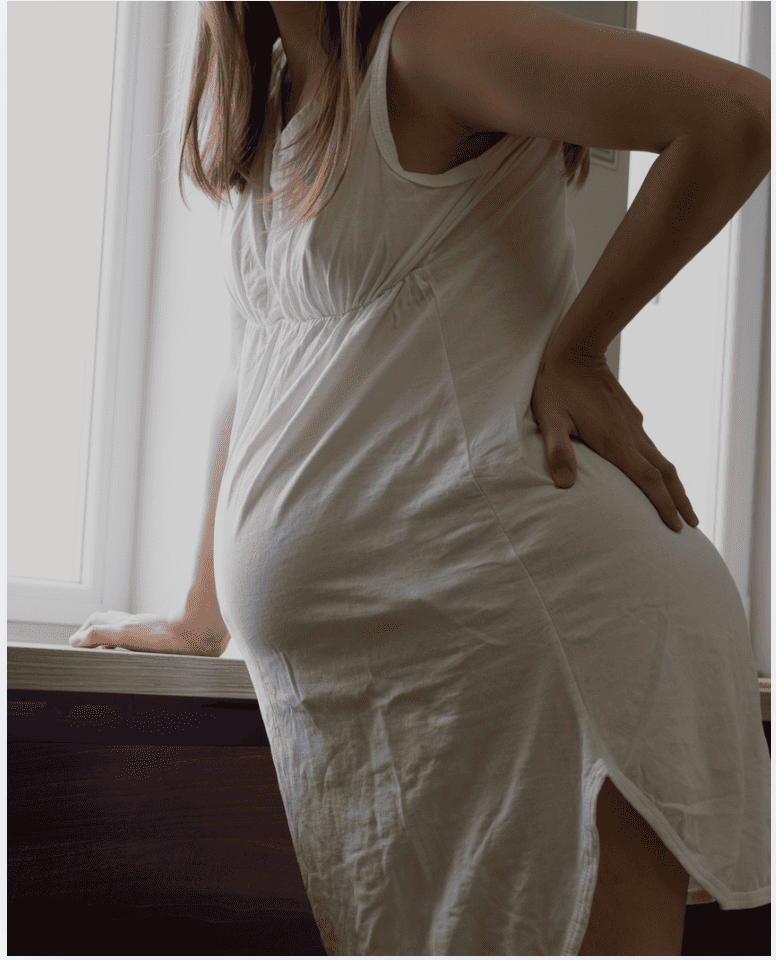
If your labour started really slowly, took days to get going, and you were sent home, again, because you were ‘still’ only 2cm dilated, then you probably had a back-to-back labour.
I used to be the midwife who checked you in early labour, while you desperately hoped you were dilated enough to be admitted to the birth unit and sink into the heavenly birth pool.
I was also the midwife who would ask you, “Where are you feeling the contractions? Oh they’re in your back? Then let’s try something.
What’s Happening?
Back-to-back (occiput posterior, OP) means your baby's back is against your spine rather than your front, and a wider part of the head is trying to negotiate your pelvis. Contractions are often irregular, often with one big strong one, then two milder ones closer together.
Who’s at more risk of a back labour?
I saw many first full-term pregnancies with this long early phase of labour
Those mums who’d had several babies so their uterus might be softer, leaning forwards - we call it a pendulous abdomen - the baby isn’t tucked neatly under their rib cage so doesn’t engage so easily
If you’ve had a back labour before
Can I prevent it?
Back when I trained in 1999 lots of midwives were suggesting ‘optimal fetal positioning ’, where it was advised to sit in upright positions, not slouch on a couch, get on all fours lots etc but it seemed that women were doing ALL the things and still had these back-to-back babies in labour.
And then they just felt guilty that they hadn’t done enough!
So you can try all the ‘Spinning Babies’ and movement techniques, but I don’t think there is any proven way to guarantee your baby won’t be in a back-to-back position in your labour.
What are the signs of a back-to-back baby in labour?
Contractions felt in your back, not under your belly
Back pain that stays between contractions
Irregular contraction pattern
A long early phase of labour
What can help?
My favourite and easy-to-do technique is called the abdominal lift and tuck.
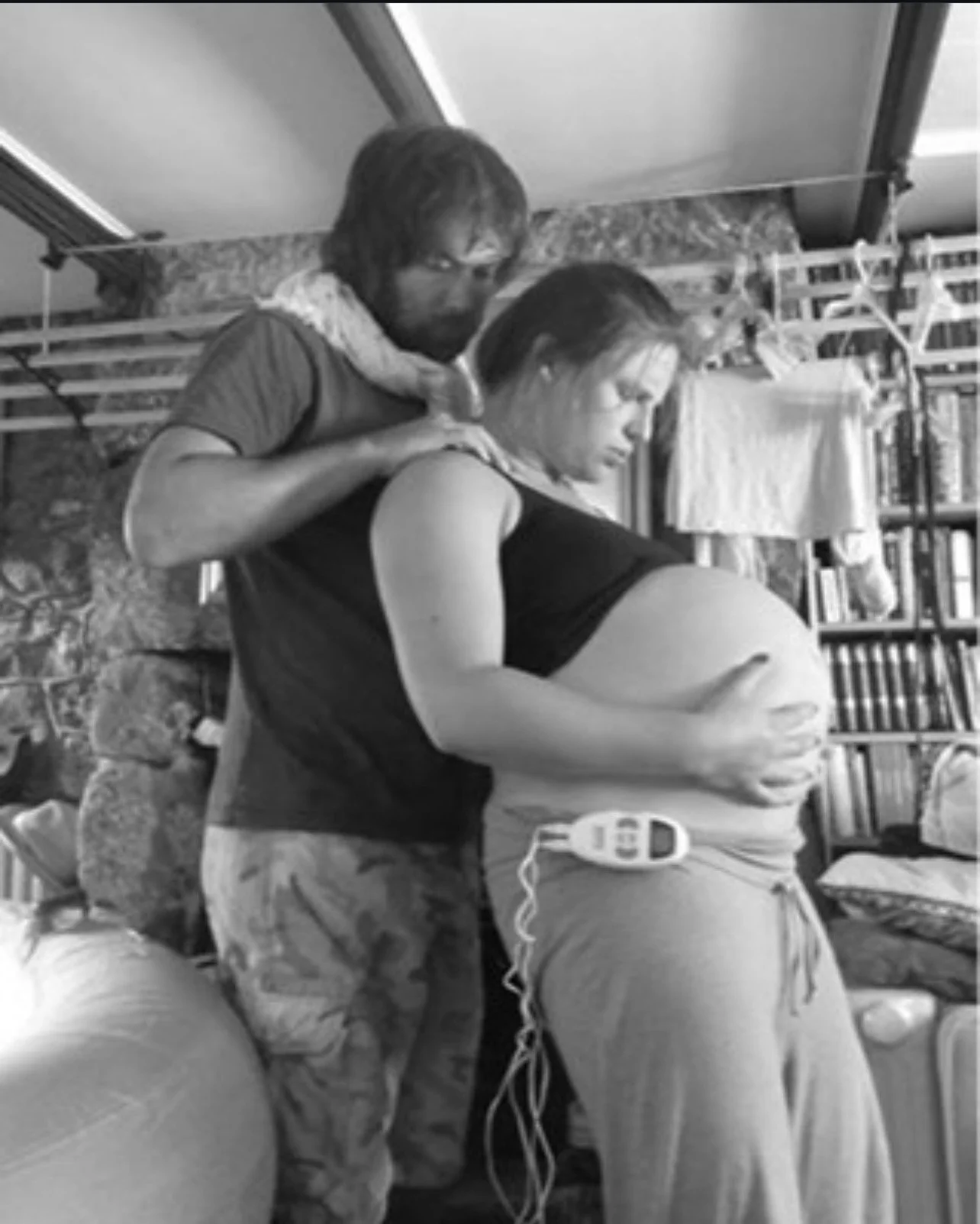
Do Together or On Your Own
Stand with feet hip-width apart
Soften your knees
Tilt your pelvis upwards
Gently lift your tummy up as if you’re tilting your baby into your pelvis
Do this during a contraction for about 10 minutes
Keep doing it if it feels nice
You’ll know if it’s worked as the back pain will ease.
I learned this from Gail Tully, Spinning Babies creator, back around 2010 when she came to the UK, and found it works a treat! The goal is to ease that back pain, which means the baby has probably shifted their position in the pelvis. But some babies still come out back-to-back - I had that once as a midwife, where the first time mum suddenly started dilating and birthed her baby easily in the pool.
If it’s worked you should notice:
the back pain eases off
The contractions start spacing regularly
Sometimes, especially with second + babies, contractions get stronger.
Babies can come quickly if it’s not your first, so be prepared!
What if it doesn’t work?
The most important thing is listening to yourself. What do you need to feel more comfortable and cope with your labour? From TENS machines, to massage, to labouring in water - all these can support you. Some women do find these are not enough. They are exhausted from days fo early labour and just need to rest. An epidural might just be what you want at that point. That’s not a failure. That’s listening to your body and caring for yourself.
What if your first labour was back-to-back?
It doesn’t mean the next one will be. AND even if it is, if your body laboured last time and you dilated past 3-4cm then your body will be different this time. Labour is usually quicker, and your baby usually has an easier time negotiating your pelvis.
Planning Your Next Birth?
Still carrying your last birth into this one?
This free 10-page excerpt walks you through the physiology that makes your next labour different, a real second-birth story, and simple tools to stay grounded when it counts.
Yours free - straight to your inbox.
Part of my upcoming journal and guide.
