
Before You Write a Birth Plan, Read This First.

I'd quite like a water birth. I'd rather not have any drugs. I know, I’ll write a birth plan.
You hope. As if wanting a natural birth is somehow asking too much.
By the time most women sit down with me, they are full of other people's birth stories and other people's fears. From Instagram to their granny, from podcasts and birth groups. I know, that was me. I thought everyone gave birth on their back, so I did that too. Twice.
The problem with the birth plan.
When women decide they want a natural birth, the instinct is to read, research, and build a thorough birth plan. I want to be mobile. I want to be off my back. No coached pushing. No episiotomy.
Because here is what I have seen from twenty years of supporting women through pregnancy and birth, suddenly you’re in pain, being cared for by the ‘expert’ who you’ve never said no to in your life and that pressure means you’ll accept every recommendation under the sun because you don’t want to be difficult.
Holding your own, under immense pressure from a professional in a uniform is a massive undertaking.
Are your someone who:
avoids conflict
finds it hard to challenge authority
worries about being liked
or about making things difficult
It describes most of us. But it matters enormously when you are in a labour room, and someone in scrubs with a badge is telling you what needs to happen next.
The cascade of intervention rarely begins with an emergency but with a yes when you really, deep down meant no. Going along with something because your partner thought it was a good idea, or because you weren't even sure you were allowed to ask questions.
This is not about blaming women for their birth outcomes - the system is not set up to maximise your chances of a vaginal birth. Preparation needs to go deeper than putting choices on paper.
Caesareans in the UK.
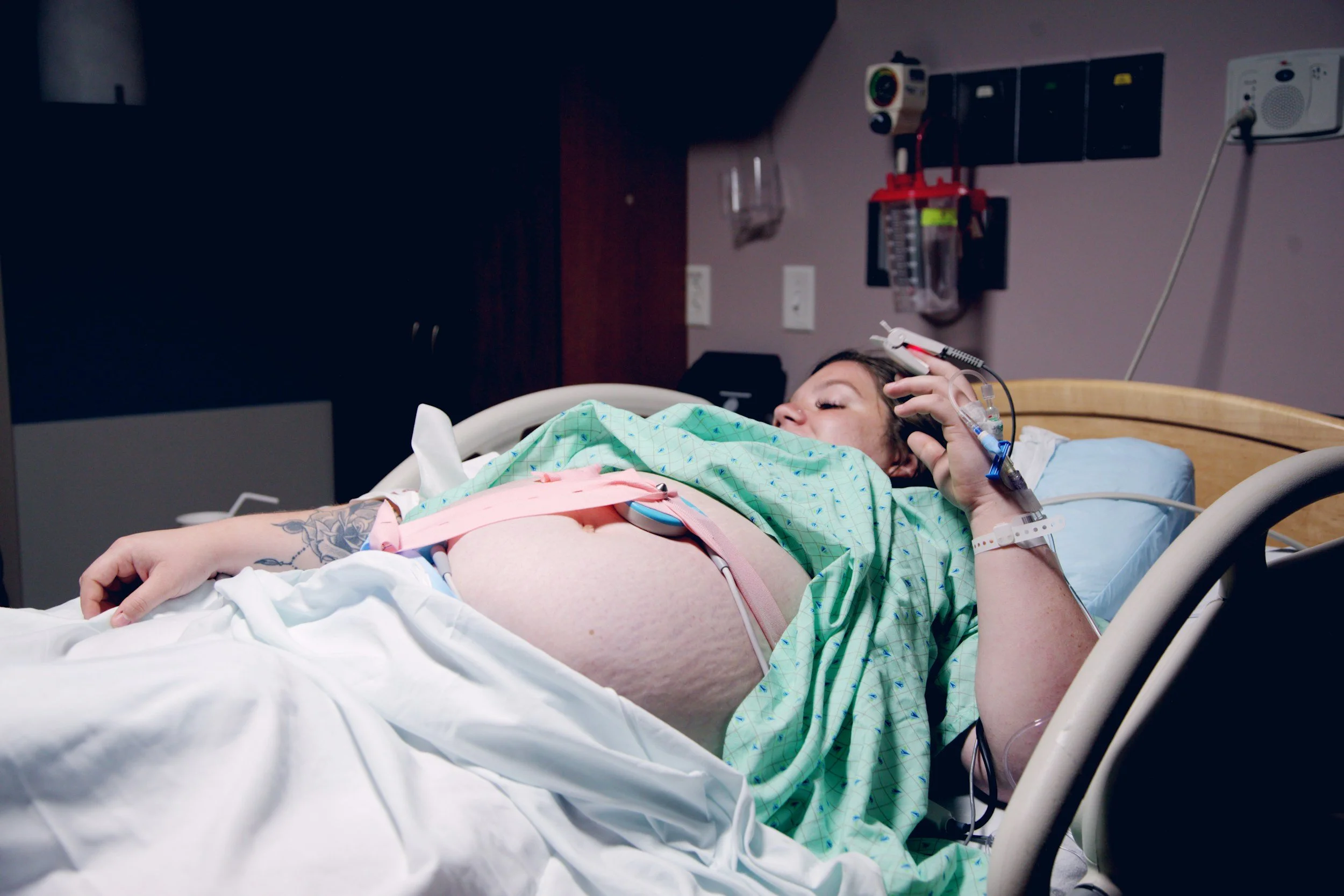
In 2026, we are approaching a caesarean section rate of close to 50%, with induction rates in some trusts reaching the same.
The majority of women are still giving birth lying on their backs, despite the evidence that upright, mobile birth opens the pelvis, supports the baby's movement, and reduces pain and intervention. Nothing has changed in thirty years.
We shouldn't have to fight for a physiological birth. The system should be designed to support it.
But as medicalisation becomes the norm and fewer and fewer practitioners have ever actually supported a physiological birth, the reality is that if you want this, you will need to know how to go out there and get it for yourself.
Know your own mind
My own first birth, in 1995, lying on my back, strapped to monitors, in pain, going along with it because I had never seen anything different. I had watched television births my whole life. That is how birth looked. I didn't know how to question it. I didn't know I could.
That is still happening in 2026.
Knowing yourself or your mind means being able to tune into your instincts, understanding your own values clearly enough that when the pressure is on, you can still articulate your own needs and make choices. At that point, the birth plan almost becomes irrelevant.
This is where I start with everyone I work with. Not with hormones or hospital policies. You.
That is the preparation that changes things.
If this resonates with you, you can find out more about how I work at the link below or come and find me on Instagram.
If you want to understand what happened with your first birth and write a different story for your next join me: Explore working with me →
