
Can I have a natural birth after a caesarean?
If you've had a caesarean and are hoping to give birth vaginally next time, you might be wondering whether it's possible. And maybe all you’ve been told are the risks of having a ruptured uterus.
Then you’ve only been told half the story.
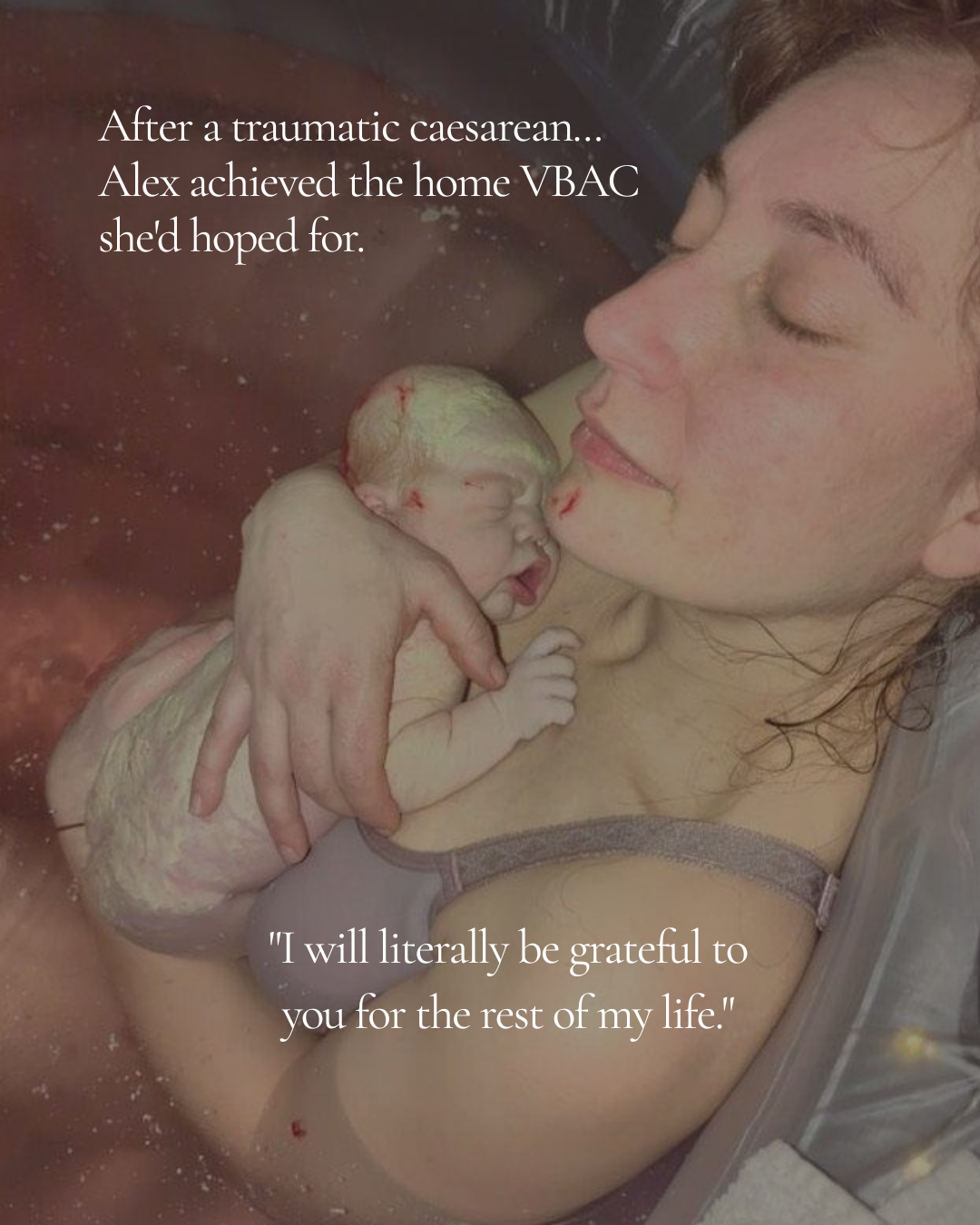
Your first vaginal birth after a caesarean?
You’ve got a 75% chance of success, according to the Royal College of Obstetricians and Gynaecologists (RCOG).
Already had a vaginal birth?
You've got an 85-90% chance of a successful vaginal birth after a caesarean. (RCOG).
I’ve attended VBACs at home, in birth centres and in hospitals as a midwife and It’s not only possible, but it can be the most healing and powerful experience.
You deserve more than a list of risks and a decision already made for you. You deserve balanced information, space to understand your options, and the chance to make the decision that’s right for you.
But I failed last time. Won’t I just end up with a repeat caesarean?
After a long or difficult labour, you’re often left feeling that your body failed you. Even after doing all the hypnobirthing, reading the research and making a detailed birth plan. You were told that your baby was too big, your pelvis was too small, you "needed” a drip, and you “failed to progress”.
But the reason they gave you in your birth debrief often hasn’t explained it through the lens of physiology - how your body was meant to birth.
A typical birth story I hear starts with an induction, having to lie on a bed because of the monitoring, the pain is so intense you get an epidural you never wanted. Which slows labour down, so they put up a drip, which affects the baby’s heart rate, and before you know it you’re being wheeled into theatre.
I'm not suggesting that every caesarean could have been avoided. Sometimes it is necessary. What matters is understanding what led to the caesarean, rather than assuming that your body was the problem.
If you can, ask for a copy of your previous birth records and consider arranging a birth reflection conversation with an independent birth worker, such as an experienced doula or independent midwife.
When I talk with clients, we unpick the timeline that led to their labour, whether it was induced or started naturally, whether their baby was back-to-back, whether they were supported to birth naturally or whether there were things that took them down the path to an unplanned caesarean.
You don't need to blame yourself or anyone else. The aim is to understand your story and decide what you want to take forward into your next birth.
What if your first birth was a planned caesarean?
One of the most beautiful, peaceful births I attended was a planned home VBAC after a previous planned caesarean for a breech baby. She had never dilated. She laboured using only her breath and a hypnobirth CD (it was 2007). She lay naked on her sofa to rest, having dilated to 5 cm, and silently breathed through contractions until I went to listen in to her baby’s heartbeat. As I moved closer, I saw the smooth, round bag of waters emerging, with her baby’s head close behind. She was fully dilated; her body had pushed her baby down, and her baby was coming! She gave birth soon after in her home, by the firelight, on the sofa. A home VBAC that stayed with me forever.
What about the risk of uterine rupture?
Yes, there is a small and rare risk of this happening during labour but why does it seem like this in the one thing everyone wants to remind you? The actual risk that we estimate is as below:
1 in 200 (0.5%), which means 199 out of 200 would not experience a uterine rupture.
The important thing is to understand what the evidence says about your situation, discuss your individual risk factors with a maternity professional who can explain them clearly, and make decisions based on balanced information rather than fear alone. You can take the risk seriously without allowing it to become the only thing you think about when preparing for your birth.
What can help you prepare for a VBAC?
Let's start here: it's a VBAC. A vaginal birth after a caesarean.
Yes, you've had a caesarean before, and there are specific things to understand about your options and the risks involved. But I don't want you to spend your whole pregnancy focusing on the caesarean scar, the possibility of another caesarean, or everything that could go wrong.
The vaginal birth is the bit you need to prepare for.
How does labour work? What helps your body do what it's designed to do? What can get in the way? How do you navigate a maternity system that may approach birth very differently from how you want?
These are the things I explore in my birth preparation masterclass, because preparing for a VBAC needs to be about more than understanding your risks. It's about giving yourself the best possible foundations for the vaginal birth you're hoping for.
1. Understand how physiological birth works
Your body doesn't need to be taught how to give birth, but understanding how birth works can help you recognise what's happening and make sense of the decisions you might face.
Learn about the hormones involved in labour, how your baby's position and your pelvis work together, and why movement, privacy and feeling safe can matter.
This isn't about finding a magic technique or getting everything right. It's about understanding the conditions that support labour to progress well and also knowing what to do if it is going slower or is more challenging than you expected.
2. Think about where and how you want to give birth
Where you give birth, who is with you and how you're treated can make a massive difference to how your hormones work.
Do you feel safe enough to relax and follow your instincts? Will you be supported to move freely? Will the people around you listen to you and respect your decisions?
3. Understand the system you're giving birth in
This is a big one.
You can understand physiology inside out, but you also need to understand how maternity care works and what might be recommended to you during labour.
You don't need to go into birth expecting a battle. But you do need to understand your options well enough to ask questions, weigh up recommendations and make decisions that feel right for you.
4. Learn to use your voice
It's one thing to know what you want when you're sitting at home writing your birth plan. It's another to make decisions when you're in labour, tired, vulnerable or being told that something needs to happen by a midwife or doctor.
Think about the questions you might want to ask. Make sure your birth partner understands your preferences and knows how to support you. Definitely consider hiring a doula. When you’re being constantly reminded of how “risky” everything is, they will remind you of the facts and evidence, support you unconditionally and be in your corner.
5. Prepare for the possibility that things change
No one can guarantee that you will have a natural vaginal birth after a caesarean. Birth is unpredictable, so making a Plan B and knowing what is most important to you reduces your chance of feeling your birth is slipping out of your hands.
Preparing for a VBAC is about more than preparing for the possibility of another caesarean. It's about preparing for vaginal birth - understanding your body, understanding the system and learning to trust yourself as you navigate both.
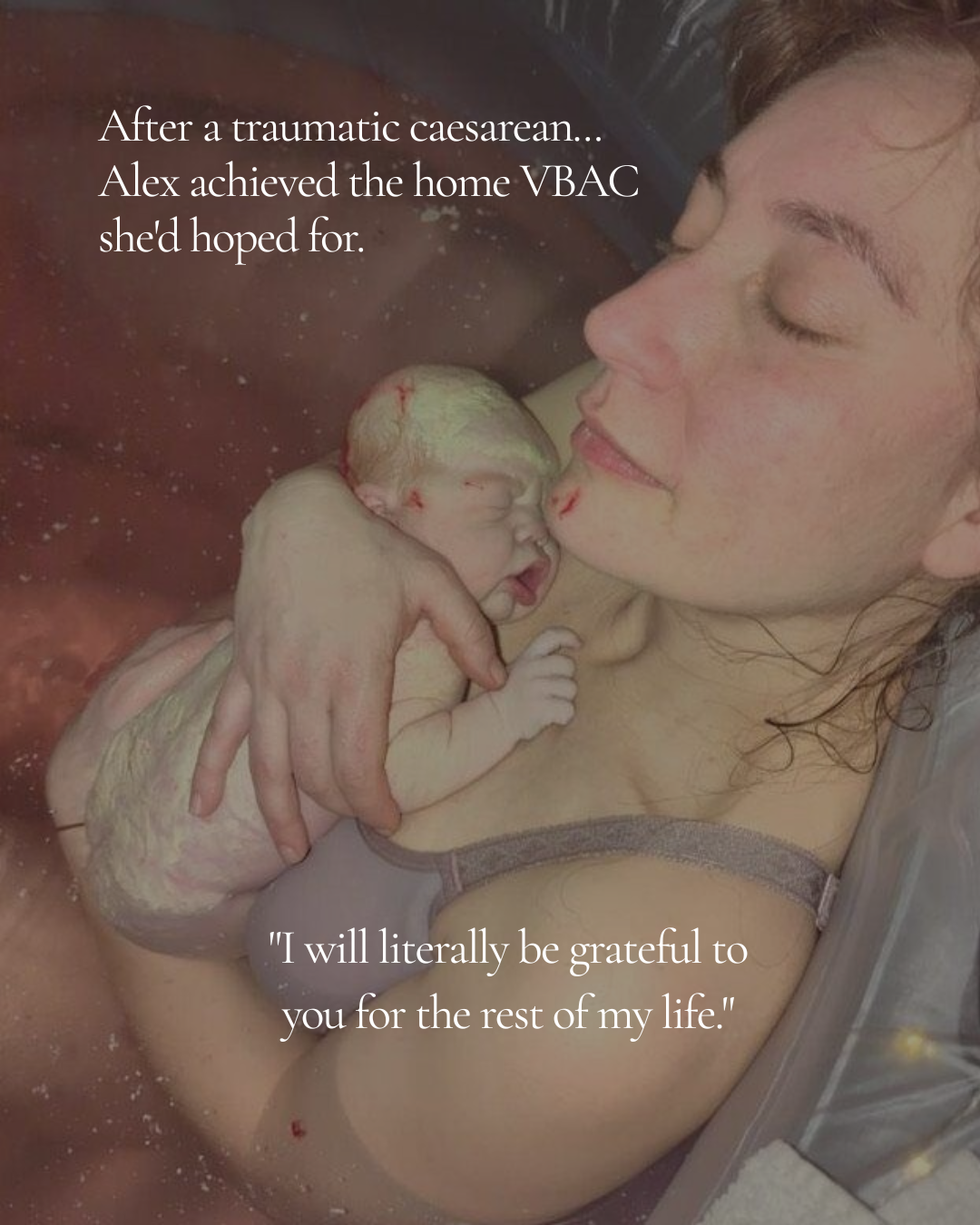
Could this be you?
Whatever questions you're carrying about birth, you deserve more than a list of risks and a birth plan.
With over 20 years of experience attending births, I'll help you look beyond the standard advice, understand the physiology of birth and explore how to prepare for the birth you really want.
Join my next birth class - it’s free!
